
Root Canal Treatment – Flower Mound, TX
Alleviate Your Tooth Pain. Restore Your Beautiful Smile.
At your biannual checkups, Dr. Barge conducts detailed oral exams so that decay and damage are caught in the initial stages – before more extensive restorative care is needed. With that said, sometimes cavities can develop quickly, penetrating to the inner chambers of your tooth in a matter of months. When that happens, we need to intervene with root canal treatment before a tooth extraction becomes necessary. Don’t worry – despite what its reputation would have you believe, the procedure is painless!

Why Choose Dr. Lauri Barge for Root Canal Treatment?
- Same-Day Emergency Appointments
- Sedation Dentistry Available
- Several Financial Solutions Available
Do I Need Root Canal Treatment?

There are a few common warning signs that you should look out for, including:
- Persistent tooth pain
- Discoloration on your tooth
- A pimple-like bump on your gums
- Sharp discomfort when biting down
- Red, inflamed, or bleeding gums
If any of these arise (or it’s been more than six months since your last checkup and cleaning), you should schedule an appointment with our Flower Mound emergency dentist. That way, she can examine the condition of your oral health and determine what the next best steps are.
The Root Canal Process
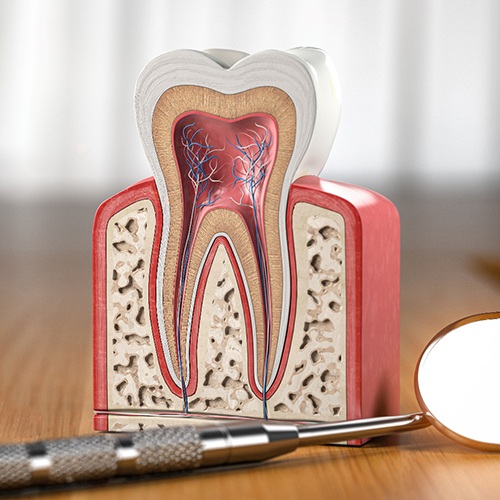
For many patients, having an idea of what to expect during the procedure can help alleviate some anxiety. Of course, if you’re getting nitrous oxide sedation or oral conscious sedation, then your appointment will begin with the necessary steps to ensure that you don’t feel an ounce of stress in the treatment chair. Even if you aren’t getting sedation dentistry, however, we will thoroughly numb your mouth. That way, you don’t feel anything more than some slight pressure from our team working.
Once you are numbed, Dr. Barge will make a tiny hole in your tooth to access the inner chambers. Then, we will remove the infected tissue, sanitize the area, and fill the tooth with a warm, rubbery substance to prevent bacteria from getting inside. Lastly, we will place a dental crown over your treated tooth, which will improve its strength and appearance.
The Benefits of Getting a Root Canal

As we mentioned at the very beginning of this page, root canal treatment is essential because it helps save your natural tooth – that’s a massive benefit! Outside of that, there are several other perks, including that the restorations are extremely lifelike, the procedure is painless, and the results can last for decades with proper care.
If you have any questions about root canal treatment – even if you want to just learn more about sedation dentistry – please don’t hesitate to contact us. We’re here to help!
Understanding the Cost of Root Canals

If you’ve been told you need a root canal, you may be wondering how much this treatment will cost. After all, if you can’t afford it, you can’t commit to it. But due to the highly personalized nature of this procedure, there’s no way to quote a ‘one-size-fits-all’ price. There are a variety of individual factors that determine the cost that can only be determined by Dr. Barge at your consultation. However, once she’s taken a closer look, here’s how we’ll calculate your price.
Factors That Can Affect Root Canal Cost
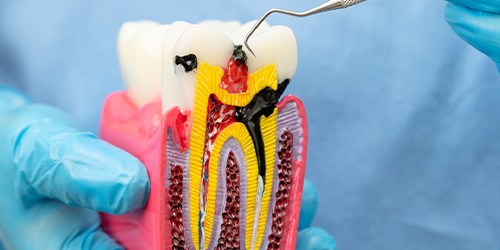
It is very difficult to determine the exact cost of a root canal procedure until Dr. Barge has had the opportunity to assess your smile. Ther are several important factors that can influence the total, including:
- The type and location of the tooth or teeth in question.
- The overall difficulty of the root canal, and whether a specialist will need to be brought in to assist with it.
- If you’ll need any additional services such as a new dental crown.
Is It Cheaper to Pull My Tooth?

Many patients believe it’s easier and more affordable to just skip the root canal and have their tooth extracted instead. Unfortunately, however, while it’s true that extractions are typically less expensive than root canals on the surface, it is important to consider the long-term consequences of removing a natural tooth. Not only can your bite be negatively impacted as your remaining teeth shift out of place, but this can result in difficulties eating and speaking clearly, as well as general discomfort.
To prevent this, most dentists will recommend replacing the tooth with either a dental implant or dental bridge, which each incur separate costs. Ultimately, it can be much more affordable to save your natural tooth than pay to replace it later in life.
No matter what you decide, however, be sure to decide quickly. The longer you wait to take care of an infected tooth, the more likely you’ll need to have it extracted either way!
Does Dental Insurance Cover Root Canal Treatment?

Because it is considered a major procedure, in most cases dental insurance will cover anywhere from 50% to 80% of the cost of a root canal after your deductible has been met. However, please be aware that every plan is different, which is why it’s so important to confirm coverage with your dental insurance company first. Our team is happy to help with this process, too!
Other Options for Making Root Canal Treatment Affordable

In addition to welcoming dental insurance, Dr. Barge is proud to offer the following options to help make root canal treatment more affordable for her patients:
- Our In-House Membership plan offers valuable discounts on any treatment performed in-house by Dr. Barge.
- We happily welcome payment plans from our preferred third-party lenders, CareCredit and Cherry, which can break up the cost of your root canal into multiple, low-to-no-interest monthly payments.
Dr. Barge and the team are ready to assist you with your root canal. We’re happy to help you navigate the cost of this important treatment, so if you have any payment-related questions, please don’t hesitate to let us know!
Root Canal FAQs
Can I take antibiotics instead of getting a root canal?
If you struggle with dental-related anxiety, you may be interested in exploring your options outside of a root canal. However, antibiotics are not a suitable replacement since the medication travels through your bloodstream, and your bloodstream does not reach the pulp of your tooth. So, in order to effectively eliminate the infection, we usually only have two options: a root canal or an extraction.
The good news is that you don’t have to white-knuckle your way through the procedure. After all, we offer both nitrous oxide and oral conscious sedation! These can effectively alleviate stress, anxiety, and nerves, allowing you to relax comfortably while we provide the restorative care that you need.
Do I still need a root canal if my toothache went away?
If you were advised to get a root canal to alleviate the dental sensitivity, discomfort, and pain you were experiencing, but now those symptoms have gone away, you might be wondering if you can cancel your upcoming visit (or postpone scheduling one altogether). The short answer is “no.” The reason for this is simple: the change is likely due to the nerve dying. Although this will cause your toothache to subside, the infection is still present. So, it’s important that you get the care that you need ASAP.
What happens if you wait too long for a root canal?
The longer you wait, the more time the infection has to progress. Not only can it damage your tooth beyond the point of repair, but it can also spread throughout your mouth and body. That’s why getting the restorative dental care that you need is so important for your oral and overall health!
Can root canals be prevented?
Many common dental issues can be prevented, including tooth decay. So, if you want to reduce your chances of needing a root canal, you need to incorporate healthy habits into your routine, like brushing your teeth each morning and flossing each night before you go to bed. You also need to eat healthy, well-balanced meals, limit your intake of added sugar, and schedule a dental checkup and cleaning every six months.
Important reminder: If you begin to suspect that something is wrong, don’t wait until your biannual appointment. Instead, contact us right away! Over the phone, we can learn a little more about your symptoms, assess the urgency of the situation, and schedule an appointment with our dentist in Flower Mound, Dr. Lauri Barge.
Do root canals make you sick?
No, getting a root canal in Flower Mound will not make you sick. The belief that the two are connected stems back to the 1920s. At the time, a dentist named Dr. Weston Price claimed that root canal treatment didn’t remove all of the bacteria and, therefore, it was better to remove an infected tooth. However, his research was poorly designed, and his findings have been disproven on several occasions.